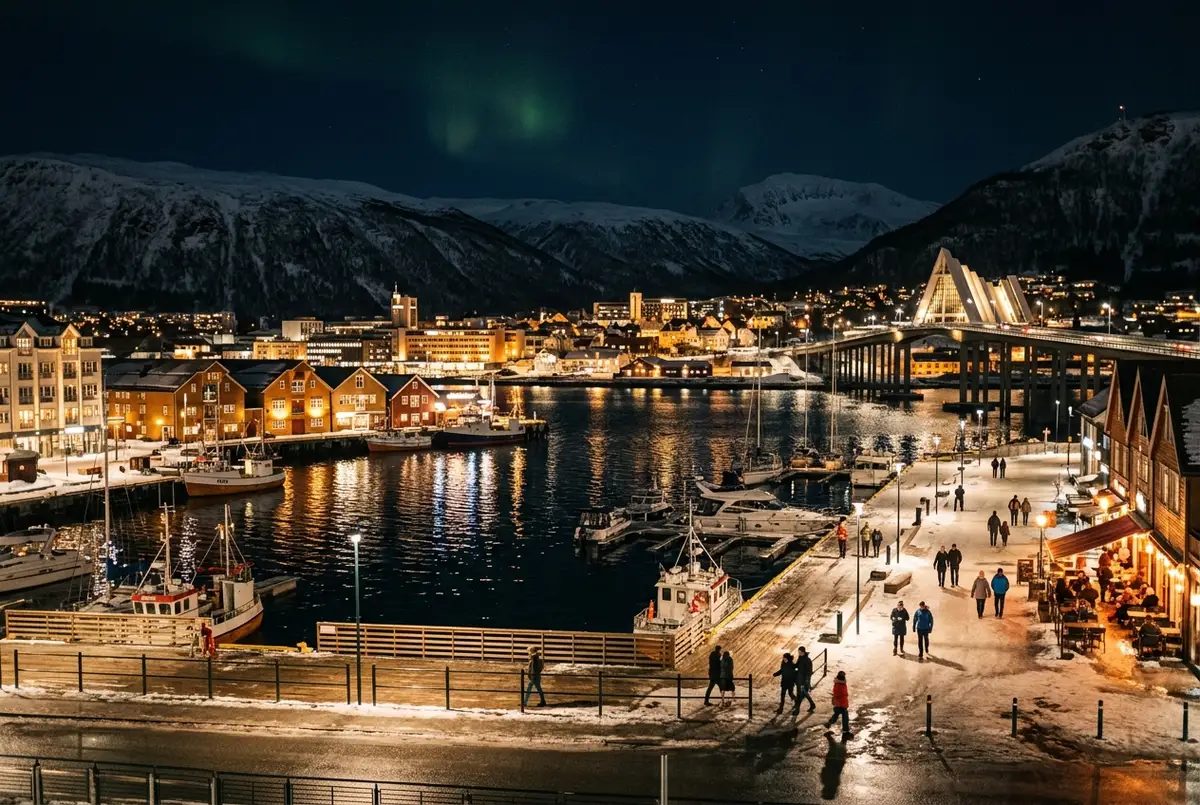
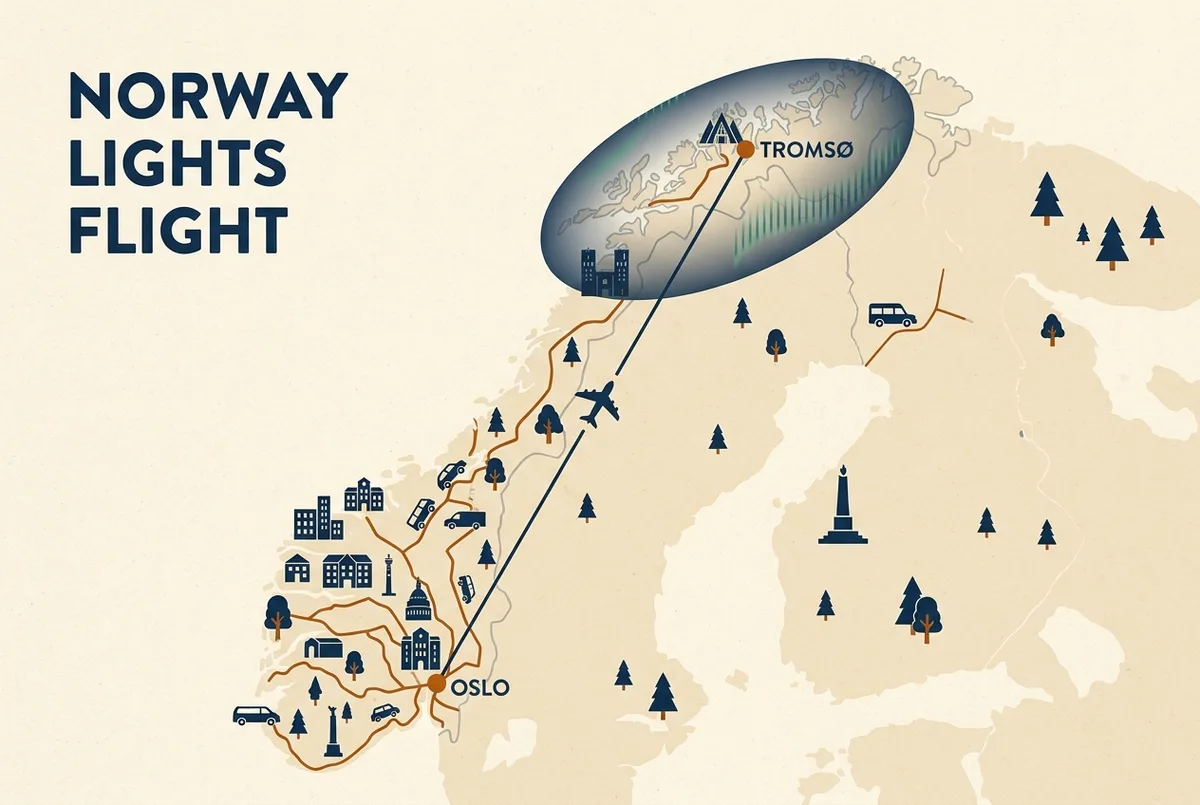
Aurora borealis in Oslo is possible in theory but rare in practice: the city sits at roughly 60 degrees north, well south of the aurora oval that reliably lights up the sky over places like Tromso. Here is what I would actually do if Oslo is your starting point: treat it as your international gateway, not your viewing base, and book a short domestic flight north before you plan a single night of aurora chasing. This guide explains exactly why Oslo underperforms so consistently, and what the better move looks like once you know that.
Why Doesn’t Oslo See the Northern Lights More Often?
Latitude is the whole story. The aurora oval, the ring-shaped zone where displays are strong and frequent, typically sits well north of Oslo’s 60 degree line, so the city only catches a glimpse when solar activity is unusually intense and the oval expands much further south than normal.
I would not plan a trip around that scenario. Those expanded, Oslo-visible events happen only a handful of times per solar cycle, and you cannot schedule a vacation around a coin flip that rare.
How Often Does a Strong Enough Display Actually Reach Oslo?
Genuinely rarely, maybe a few nights in an entire year during an active solar period, and even then the display is usually a faint glow low on the northern horizon rather than the overhead curtain of light you see in photos from further north.
I would manage your expectations here more than most travel guides do. If your main goal is actually seeing the northern lights, not just theoretically being in Norway while it might happen, Oslo is not the place to build that plan around.
Does Oslo’s City Lighting Make It Even Harder to See?
Yes, on top of the latitude problem. Oslo is a genuine capital city with significant light pollution, which washes out a faint aurora glow the same way any city’s lighting does, meaning even a borderline display that does reach Oslo’s latitude might not be visible from inside the city itself.
I would not expect to step outside your Oslo hotel and casually spot anything, even on a lucky night. You would need to drive well outside the city to a dark spot, and even then the odds remain thin compared to a proper aurora destination.
Is a Short Flight North the Best Fix for Oslo Travelers?
Yes, clearly. Oslo has frequent, relatively cheap domestic flights to Tromso, which sits deep inside the aurora oval with a mature guided-tour market built specifically around chasing clear sky on any given night.
I would book that connector flight as early as your dates allow, since prices on the Oslo-Tromso route climb the closer you get to the darkest, most popular weeks of the season. My guide to getting to Tromso for the northern lights covers the realistic travel options once you are ready to make that leg.
Should You Skip Oslo Entirely and Fly Straight to Tromso?
Not necessarily, if Oslo already has a place in your itinerary for other reasons. Oslo has plenty to offer as a city stop, museums, a real food scene, and easy onward transport, so I would not treat a planned Oslo stay as wasted time.
I would just stop expecting it to double as an aurora viewing base. Treat any Oslo night as a comfortable stopover rather than a place to squeeze in an aurora attempt, since the odds there simply are not worth building expectations around.
What Should an Oslo-Based Traveler Actually Book?
A Tromso-based tour, once you have made the flight north. Tromso’s guided operators actively chase clear sky rather than waiting for it to appear over a fixed city skyline, which is the entire reason the odds there run so much higher than anything Oslo can offer.
I would compare a few options before picking one. The eight Tromso Northern Lights tours on this site range from a budget bus chase to a boat cruise straight out of the harbour, and the right pick depends mostly on whether you want the widest possible search radius or a shorter, more predictable evening.
What About Other Southern Norwegian Cities Like Bergen?
The same problem applies. Bergen sits at a similar southern latitude to Oslo, so it faces the same fundamental limitation: the aurora oval simply does not reach that far south on a typical winter night, no matter how clear the sky happens to be.
I would not treat Bergen as a backup plan if Oslo disappoints. Both cities share the same latitude problem, so switching between them does not meaningfully change your odds, only a genuine flight north to somewhere like Tromso does that.
How Much Does the Oslo to Tromso Flight Typically Cost?
Prices vary with season and how far ahead you book, but the route is a well-served domestic connection with several daily departures, generally cheaper than a comparable international short-haul flight of similar distance. Booking a few months ahead of a peak-season trip usually gets a noticeably better fare than booking a few weeks out.
I would treat this flight as a core, non-negotiable line item in your budget rather than an afterthought, since skipping it in favor of hoping for a rare Oslo sighting is the single most common mistake I see in trip plans built around Oslo alone.
Is Alta or Another Northern City a Better Fit Than Tromso for an Oslo Traveler?
Sometimes, depending on your priorities. Alta has a slightly drier climate and its own famous Northern Lights Cathedral, but it also has a smaller flight network and a thinner tour market than Tromso. My full Tromso versus Alta comparison walks through that trade-off if you are weighing the two.
What Time of Year Should an Oslo Traveler Fly North?
Anytime between late September and early April, with November through February offering the darkest skies and generally the strongest odds once you are in Tromso. The season is long enough that a specific departure city like Oslo does not really constrain your dates, only the flight itself does.
I would book the domestic leg to line up with the darkest weeks you can manage, since a longer polar night gives your guide more hours each evening to actually find a gap in the clouds.
My Honest Recommendation
I would not build any aurora expectations around an Oslo stay, full stop. The physics of where the aurora oval sits most nights simply does not favor a city at 60 degrees north, no matter how good the rest of your trip is.
Instead, I would treat Oslo purely as the international gateway it usually is, book a short domestic flight to Tromso, and put your actual aurora-chasing nights there. That single change in plan does more for your odds of genuinely seeing the northern lights than any amount of luck waiting around Oslo ever could. From there, I would go ahead and book a Tromso aurora borealis tour rather than gamble another night on a city that was never built for this.
Frequently Asked Questions
Can you see the northern lights from Oslo?
Rarely. Oslo sits too far south for the aurora oval to reach it reliably, so a visible display there is a genuinely rare event, even during an active solar year.
How far is Oslo from a good aurora viewing spot?
Tromso, the nearest genuinely reliable aurora destination, is roughly a two-hour direct flight north of Oslo.
Is it worth staying in Oslo hoping to see the northern lights?
No, I would not plan around it. Book a domestic flight north to Tromso instead if actually seeing the aurora is your priority.
Does Oslo’s city lighting affect aurora visibility?
Yes. Even on a rare night when a display does reach Oslo’s latitude, the city’s own light pollution can wash out a faint glow that would be clearly visible from a darker location further north.
What’s the best way to combine an Oslo trip with seeing the northern lights?
Treat Oslo as a city stop before or after your trip, then fly north to Tromso specifically for a guided aurora tour during the darkest, most active weeks of the season.
Explore Choosing Your Norway Base
Latitude and aurora oval patterns referenced here are consistent with Visit Norway’s official northern lights information.